Young Christmas: Bringing a Sweet and Quirky Handwritten Touch to Modern Design
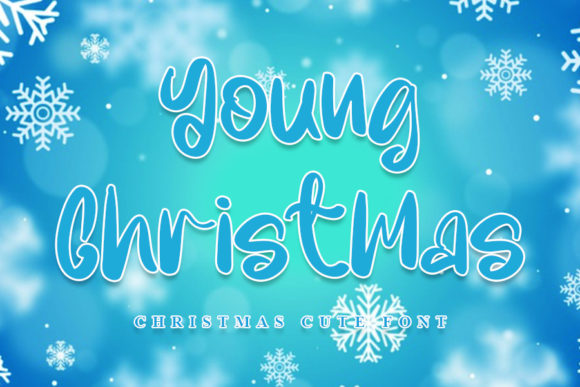
In an era where digital screens dominate our visual landscape, the yearning for authentic human touch has found a powerful outlet in typography. Fonts that evoke personality, warmth, and craftsmanship are becoming essential tools for creators looking to stand out. Young Christmas is a perfect embodiment of this movement. This sweet and quirky handwritten font offers a distinct blend of playful charm and practical versatility, allowing designers, businesses, and hobbyists to infuse their projects with a sense of personalized joy.
The relevance of fonts like Young Christmas extends beyond mere aesthetics. It taps into a broader cultural shift towards authenticity and emotional connection in branding and communication. As users become adept at filtering out generic, corporate-looking visuals, a unique handwritten style can serve as an immediate signal of care, creativity, and approachability. Whether used for a boutique logo or a personal wedding invitation, Young Christmas provides that critical first impression of warmth.
The Evolution of Handwritten Fonts in Digital Design
Handwritten typefaces have evolved dramatically from their early digital incarnations, which often felt stiff or artificially generated. Today, fonts like Young Christmas are crafted with sophisticated attention to detail, capturing the natural variations, ligatures, and flow of actual penmanship. This evolution responds directly to changing user expectations. Audiences now expect digital content to feel less sterile and more human, especially in spaces that celebrate personal milestones, artistic expression, or small-business ethos.
This trend is also fueled by modern creative workflows. With design software and online marketplaces making font acquisition and implementation seamless, accessing a specialized tool like Young Christmas is easier than ever. Freelancers, marketers, and educators can quickly integrate it into projects without needing extensive typographic training. The font becomes a ready-made solution for adding character, saving time while elevating the final output.
Where Young Christmas Makes a Practical Impact
The utility of Young Christmas is defined by its broad applicability. Its sweet and quirky nature makes it particularly effective in contexts where emotion and personal touch are paramount. Consider a wedding invitation: the font instantly conveys romance and celebration, setting the tone for the entire event. For a small cafe or artisan shop logo, Young Christmas can suggest homemade quality and friendly service, distinguishing the business in a crowded marketplace.
Beyond these traditional uses, the font finds powerful applications in modern digital and physical media. Bloggers might use it for engaging article headings to break the monotony of standard serif or sans-serif text. Entrepreneurs could employ it on signage or labels for a product line to emphasize craft and attention to detail. Its readability and charm make it suitable for posters announcing community events, badges for online courses, or even headlines in newsletters aiming for a more conversational tone.
Key Applications for Professionals and Creators
- Brand Identity & Logos: For businesses wanting to project warmth and uniqueness, Young Christmas offers a memorable foundation for logos and letterhead.
- Personal & Commercial Stationery: Wedding invitations, birth announcements, and thank-you cards gain an immediate personal touch.
- Marketing & Promotional Materials: Posters, social media graphics, and t-shirt designs benefit from the font’s eye-catching and friendly demeanor.
- Digital Content Headings: Website banners, blog post titles, and email campaign headers can use Young Christmas to create a more inviting entry point for readers.
- Educational & Community Materials: Labels for workshops, badges for achievements, or news for local bulletins feel more approachable and engaging.
Aligning with Contemporary Design Trends
Young Christmas naturally aligns with several persistent trends in design. The move towards maximalism and expressive visual language welcomes fonts with strong personality. Similarly, the DIY and maker culture, celebrated across online platforms, values aesthetics that look crafted rather than mass-produced. This font fits perfectly within projects that tell a story of individual effort and passion.
Moreover, in a marketplace saturated with similar visual templates, using a distinctive handwritten font like Young Christmas is a straightforward strategy for differentiation. It helps a project avoid the look of generic, template-driven design. This is crucial for small businesses, freelancers, and content creators who rely on visual identity to build trust and recognition in their niche.
Implementing Young Christmas with Strategic Consideration
While the charm of Young Christmas is undeniable, its effective use requires some practical consideration. Its sweet and quirky character means it is best deployed as a display font—for headings, logos, and short, impactful text blocks. Using it for long paragraphs could compromise readability and dilute its special effect. The recommendation is to pair it with a simpler, more neutral font for body text, creating a balanced and professional composition where the handwritten style acts as a highlight.
Another key observation is contextual matching. Young Christmas excels in projects associated with celebration, creativity, personal connection, and lightheartedness. It might be less suitable for highly formal corporate reports or technical documentation. Understanding the emotional tone of your project is essential to leveraging the font’s strengths appropriately.
Realistic Examples and Observations
Imagine a freelance photographer using Young Christmas for the branding on their website. The font on their logo and service headings immediately suggests a personal, client-focused approach, contrasting with the more impersonal portfolios of larger studios. An educator creating online course materials might use Young Christmas for module titles and achievement certificates, making the learning experience feel more encouraging and less institutional.
For a holiday market or seasonal product label, the font’s name itself—Young Christmas—and its playful style naturally evoke festivity and cheer, making it a go-to choice without needing overly complex design. These applications show how the font solves real design problems by providing an accessible path to a specific, desired emotional resonance.
Why Handwritten Character Matters Now
People are paying more attention to fonts like Young Christmas because visual communication has become both more crowded and more intimate. We consume vast amounts of digital content, yet we also seek deeper connections with the brands and creators we choose. A font that feels handwritten bridges that gap. It suggests there’s a human behind the message, investing care into its presentation.
This attention is also practical. As tools for creation democratize, individuals without formal design training need assets that deliver high impact with minimal tweaking. Young Christmas is such an asset. Its inherent style does the heavy lifting, allowing a blogger, a small business owner, or a hobbyist to produce professional-looking results that resonate on a personal level.
Final Thoughts on a Versatile Creative Tool
Young Christmas stands as more than just a sweet and quirky handwritten font. It is a versatile creative tool that responds to contemporary needs for authenticity, differentiation, and emotional design. Its applications—from logos to wedding invitations, from t-shirts to posters—are wide because its core characteristic is widely desirable: the unmistakable impression of a human touch.
For professionals, creators, and anyone looking to add a spark of personalized charm to their work, exploring the potential of Young Christmas offers a straightforward and effective path. By using it strategically as a display element and pairing it thoughtfully with complementary typefaces, one can harness its full potential. In doing so, projects gain not only visual appeal but also that crucial, connective layer of warmth that modern audiences increasingly value.