New Style: The Artful Return of Personal Touch in Digital Design
In a world saturated with clean, geometric, and often impersonal digital typefaces, a quiet revolution is taking place. Designers, creatives, and brands are rediscovering the power of the handwritten gesture—its warmth, its authenticity, its undeniable human connection. At the forefront of this movement is New Style, an exquisite and original handwritten font that embodies these values. More than just a tool, New Style represents a shift in how we communicate visually, bridging the gap between digital efficiency and artisanal craft.
Beyond the Pixel: Defining New Style
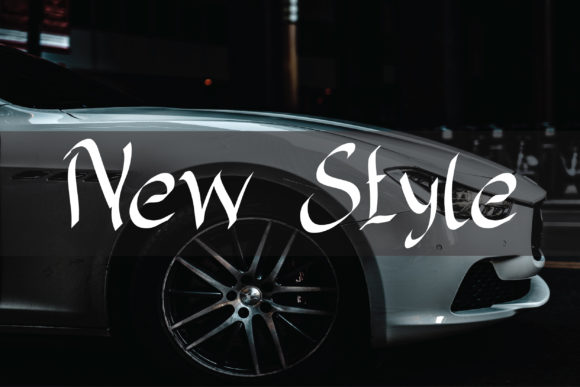
New Style is not simply a font; it is a carefully curated digital artifact of human expression. Characterized by its dainty, readable, and down-to-earth letterforms, it captures the elegance of deliberate penmanship without the inconsistency of true handwriting. Each glyph balances a romantic, personalized touch with the uniformity required for professional design. This makes New Style uniquely positioned: it offers the emotional resonance of a personal note while providing the scalability and reproducibility of a digital asset.
The core appeal lies in its application. It is ideal for projects where emotion and identity are paramount—wedding invitations that feel truly crafted, greeting cards that convey sincerity, branding elements for boutique businesses seeking a distinctive voice, or any design needing that romantic, personalized touch. New Style answers a growing demand for design that feels made, not merely assembled.
The Broader Trend: Authenticity in a Digital Marketplace
The relevance of New Style extends far beyond typography. It taps into several convergent trends across creative, business, and consumer landscapes.
- The Rise of Artisanal Branding: Consumers and clients increasingly value authenticity. In markets crowded with similar offerings, a brand’s visual identity becomes its primary handshake. A font like New Style allows a café, a florist, a independent consultant, or a lifestyle brand to instantly communicate craftsmanship and care, differentiating itself from competitors using more generic typefaces.
- Digital Nostalgia and Human Connection: As our interactions become increasingly virtual, there is a compensatory desire for elements that feel human and tangible. Using handwritten-style typography on websites, social media graphics, or digital publications injects a sense of personal warmth into otherwise cold digital spaces. New Style fulfills this need for digital humanity.
- The Creator Economy’s Toolset: For freelancers, solopreneurs, and content creators, tools that offer both quality and distinctive character are vital. New Style provides an accessible way to elevate their work without requiring the skill (or time) of actual hand-lettering. It empowers individual creators to produce assets that resonate with professional polish and personal charm.
Why Attention is Focused on This Style
People are paying attention to fonts like New Style because they address a specific gap in the modern design workflow. The default palette of many digital tools—clean sans-serifs, robust serifs—often lacks emotional range. When a project requires softness, intimacy, or a bespoke feel, designers historically had to commission custom lettering or settle for less suitable options. New Style and its contemporaries offer a practical, high-quality solution. They are becoming essential vocabulary in the designer’s lexicon, allowing for nuanced communication that aligns with project tone.
Furthermore, the attention is driven by visual culture. Social media platforms, particularly those favoring visual content like Instagram and Pinterest, have created an environment where distinctive, aesthetically cohesive branding is rewarded. A consistent use of a font like New Style can become a recognizable part of a brand’s visual signature, fostering community and recognition.
Changing Needs and Preferences
The adoption of handwritten-style fonts reflects evolving expectations from both designers and their audiences.
- Audience Preference for Relatability: Modern audiences, especially in lifestyle and consumer sectors, often reject overly corporate or sterile aesthetics. They gravitate towards brands that feel approachable and trustworthy. Typography is a direct channel for this relatability.
- Designer Demand for Expressive Tools: Designers seek fonts that do more than just “set text.” They need tools that carry narrative and emotion. The practicality of New Style—its readability coupled with its style—means it can be used for longer text blocks or prominent headlines, offering versatility that purely decorative scripts lack.
- The Hybrid Workflow: The contemporary workflow blends digital and analog thinking. Mood boards might include physical sketches, while final outputs are digital. New Style fits perfectly into this hybrid process, serving as a digital embodiment of analog warmth.
Practical Applications and Observations
The utility of New Style is best understood through real-world scenarios. Consider a wedding planner designing a suite of digital and printed materials. Using New Style for invitation text, website headers, and thank-you cards creates a seamless, romantic atmosphere across all touchpoints. A small business owner launching an online store might use New Style for their logo and product category headings to instantly convey a boutique, curated feel amidst a vast e-commerce landscape.
An important observation is its use beyond purely “romantic” contexts. A mindfulness app could employ New Style for its interface headings to suggest calm and personal reflection. A consultant’s presentation deck might use it for key quotes or section titles to add a thoughtful, humanized layer to data-driven content. This demonstrates that the font’s core value—personalized touch—is applicable wherever human connection is a design goal.
Connecting to Larger Developments
The significance of New Style connects to the larger development of emotional design and context-aware typography. As technology enables more personalized user experiences (from AI recommendations to dynamic content), the visual language must follow suit. Typography is becoming more adaptive and emotive, moving beyond mere information delivery to become an active part of the experiential tone. Fonts like New Style are precursors to this deeper integration of feeling into functional design.
Moreover, it aligns with the sustainability of craft in the digital age. It preserves and proliferates the aesthetic of handmade artistry, ensuring that this visual language remains viable and vibrant even as tools evolve. In this sense, New Style is not a retro trend, but a forward-looking adaptation, ensuring the values of personal craftsmanship translate into our future digital environments.
The Forward-Looking Utility of New Style
For professionals, creators, and marketers, integrating a font like New Style into their asset library is a strategic decision. It is an investment in a specific kind of communicative capacity—one that builds trust, evokes emotion, and creates distinction. As the digital space continues to mature, the differentiation between entities will increasingly hinge on these subtle, experiential qualities.
The ultimate insight is that New Style, and fonts of its caliber, represent the maturation of digital design tools. We have moved beyond needing fonts that merely work; we now demand fonts that feel. They allow us to imbue our digital creations with the nuance, intention, and personality that has always been the hallmark of great design, regardless of medium. In choosing New Style, a designer chooses not just a typeface, but a statement: that even in a digital world, the human touch remains indispensable.